













Students in Associate Professor of Anthropology Vincent Melomo’s class get their hands dirty — literally.
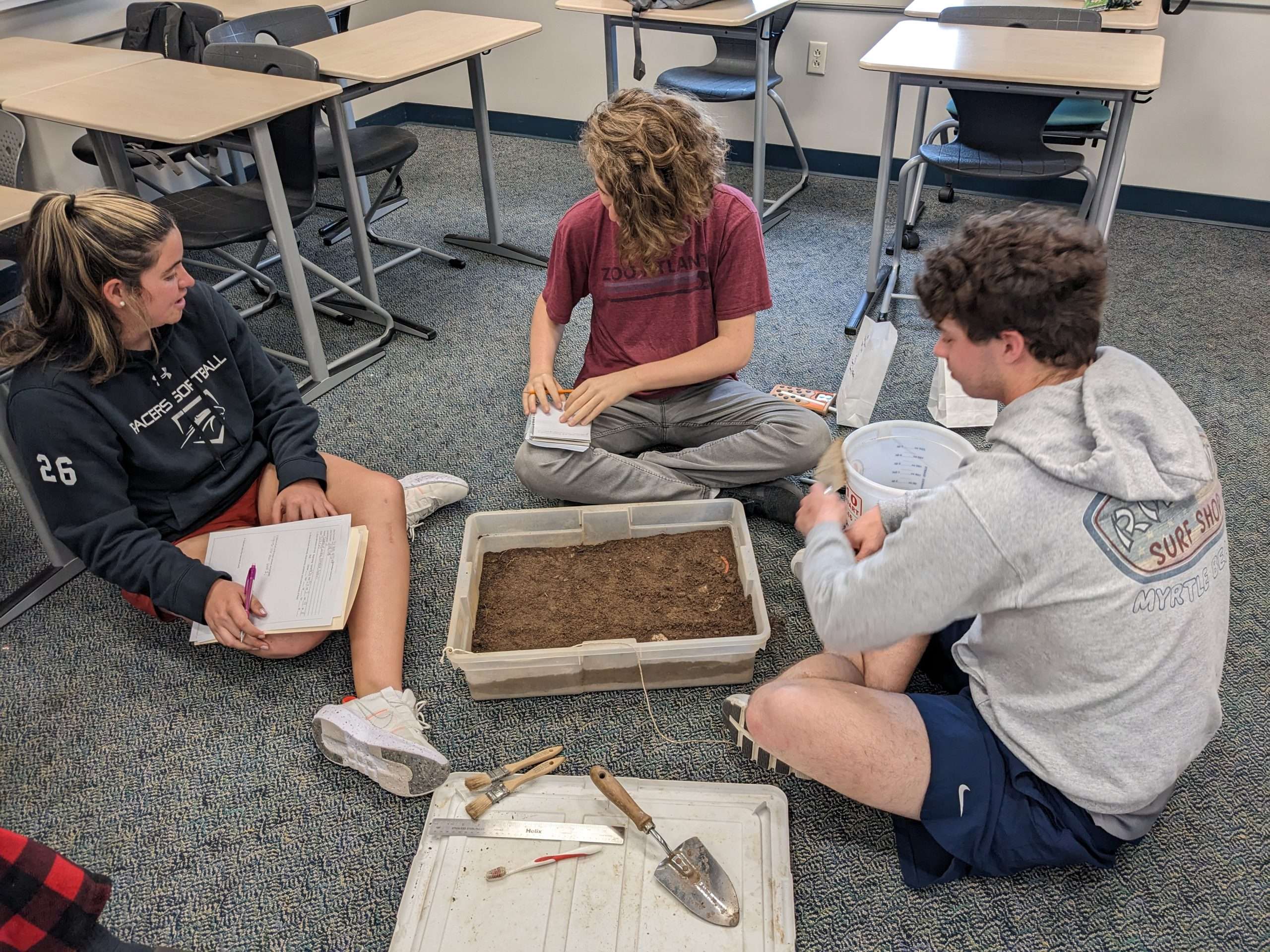
Melomo creates excavation units for students in the course “Archaeology, People, and the Past” to simulate an archaeological dig.
At some point, Melomo realized that much of what he was teaching centered on what other people were doing in the field, so he sought a way to provide students with applied experience.
He figured it was a stretch to take his students to a real excavation site, and he didn’t want to dig holes all over campus. So instead, he brought the dirt — and the discoveries — to them.
“It’s the excitement of discovery,” Melomo said. “That’s really what’s fundamental. The appeal of archaeology is that you’re finding something. So this allows them to actually find something.”
Students learn basic excavation techniques, take field notes, and complete required forms. They practice drawing and mapping — the same tasks they would do at an archaeological site as field workers. Once they’ve made their discoveries, the next important step is presenting their findings. Students receive a grade for the course after submitting a written report on their findings during the dig.
“We do excavation for a week or two,” Melomo said. “Then we do a little bit more with what we found as a way to talk about other things, other aspects of archaeology, too.”
Broken pieces of pottery, chicken bones, seashells, and acorns are just a few examples of what students might uncover in the units, as a representation of the kind of objects or items with similar textures to those that archaeologists find during digs.
Putting Classroom Lessons Into Practice
By actually conducting the digs, students apply the concepts they’re learning instead of simply reading about them in a textbook or taking a test.
Melomo said it gives students a chance to do the work and really determine whether the field is right for them.
“It’s the kind of thing that engages students, helps them understand what archaeological fieldwork is really like,” Melomo said. “And it helps them figure out, is this something I’d like to do for a career?”
Peace students have gone on to careers in cultural resource management, nonprofit development management, graduate programs in physical and biological anthropology, and more.
Longer Classes, Richer Experiences
The switch to four credit-hour courses, Melomo said, was one of the best things that happened when it came to doing the digs. This was started in the fall of 2023, and allows for fewer classes but more time for deeper engagement. The extra time in class provides more time for immersive learning activities such as the archaeological dig. When he first started doing the digs, he taught three 50-minute classes per week — a tight schedule for an experiential project of this nature.
The additional time in the current model — about 100 additional minutes per week — creates what Melomo describes as “a more intense time” that allows the work to happen more effectively.
The dig takes at least two days and can expand to three or four. In recent classes, Melomo has added a surface survey ahead of the dig, where students walk along a straight line on the ground and identify what’s on the surface.
“That’s the first thing you do to identify sites,” Melomo said.
For Melomo, that’s the ultimate purpose of the project — not just to teach archaeological methods, but to spark curiosity. Whether students leave knowing archaeology is their passion or simply gain a deeper appreciation for how the past is uncovered, he considers it a success.


