














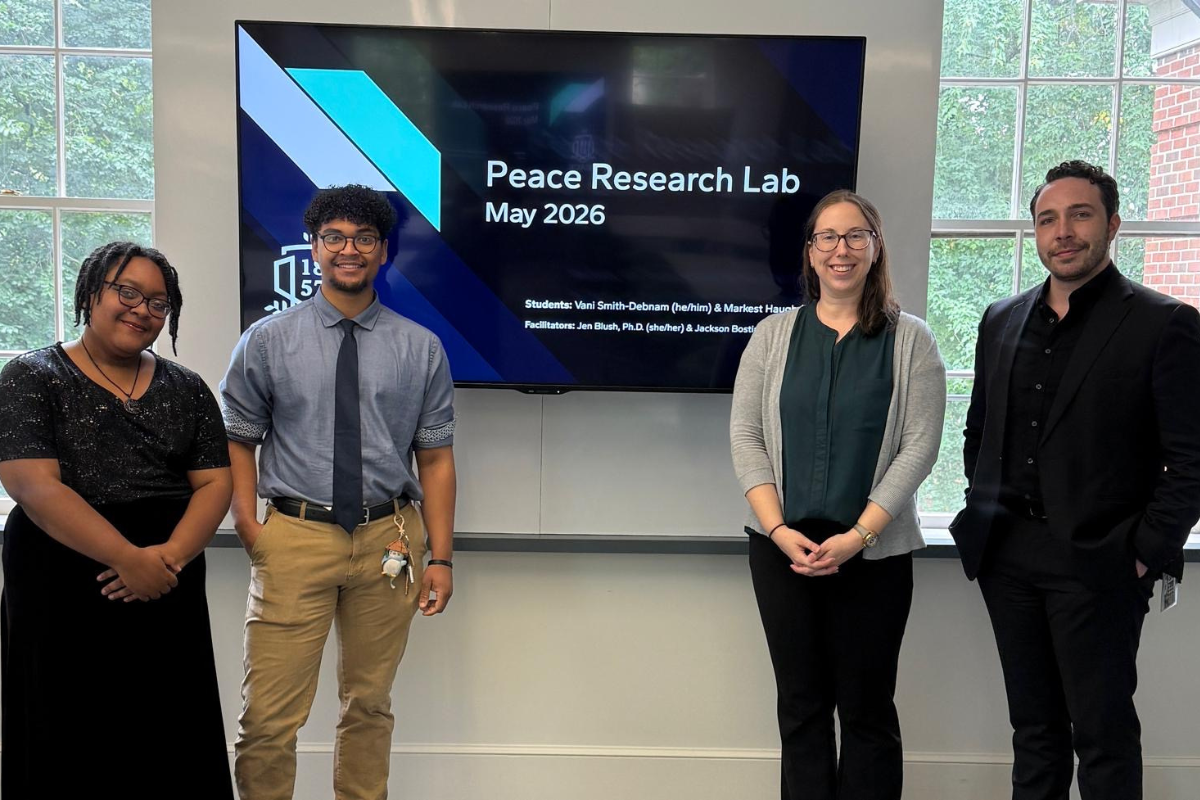
This summer, William Peace University faculty piloted an innovative undergraduate research lab program. The two-week intensive workshop gave two first-year students applied experience designing and conducting their own research projects, grounded in their interests and experiences.
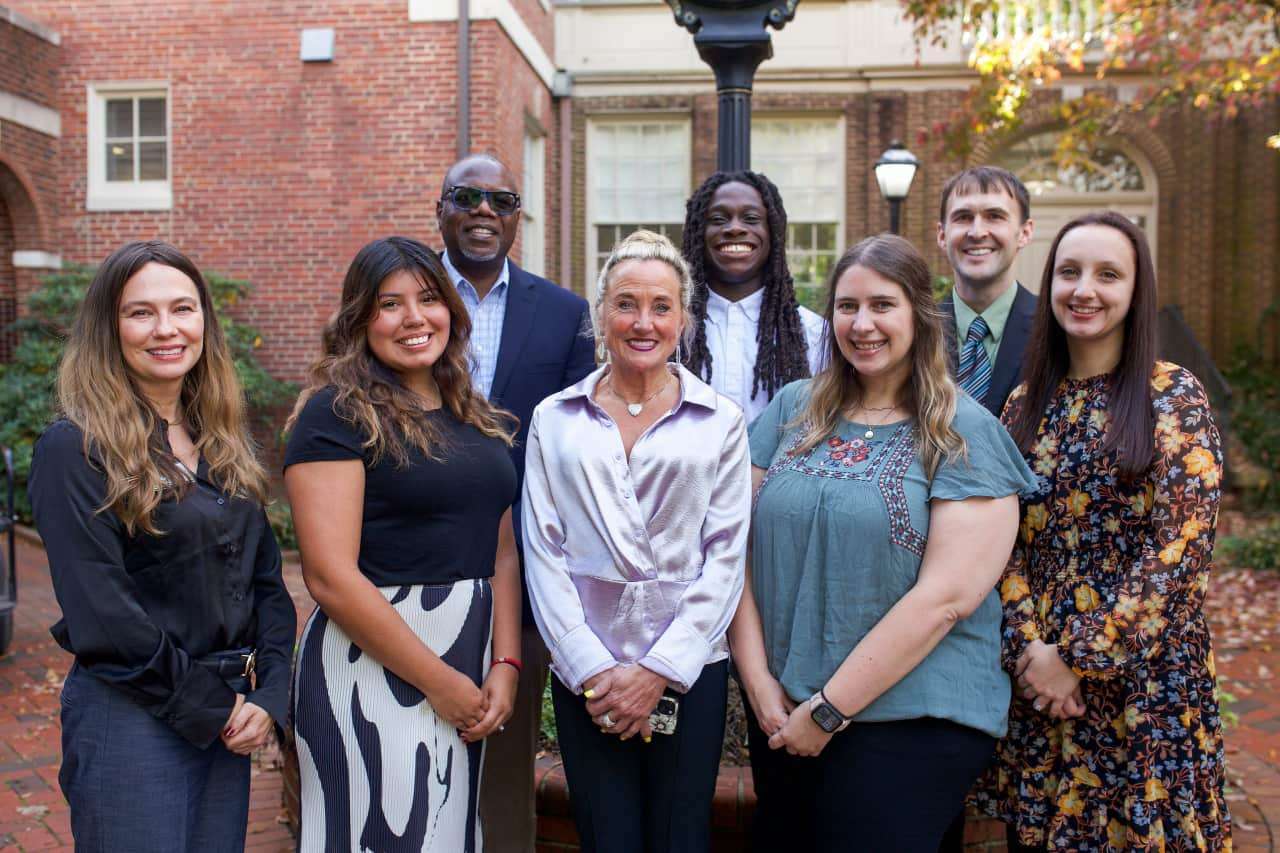
The program was co-led by Jennifer Blush, associate professor of psychology, and Jackson Bostian, assistant professor of user experience design. The idea emerged from a desire to ignite research enthusiasm among first- and second-year students.
“Undergraduate research has been recognized for a long time as a high-impact practice,” Bostian said. “It’s really valuable for students as far as their career ambitions and self-efficacy. The purpose of a university education is to learn how to use information and then to create new knowledge, and that’s where the research comes in. That’s what higher ed remains uniquely positioned to offer students.”
The first week of the lab focused on teaching the participating students, Markest Haugh ’29 and Vani Smith-Debnam ’29, essential research methods and practices. The second week prepared the students to build their own research proposals alongside faculty advisors.
“We really wanted to give them a holistic picture of what it can mean to do research,” Blush said. “We did some tours of the labs on campus and an immersive outing to some of the nearby museums. Then, they got started on their own project. They picked a topic, formulated a research question, and now they’re working on writing it up to be presented next year.”
Engaging Topics
After learning about proper methodology, the students were tasked with choosing a topic that piqued their interest. Haugh questioned how quickly and accurately students, faculty, and staff at a university identify images as AI-generated or human-made. Smith-Debnam chose a specific case study on how the NBC show Hannibal frames masculinity as performance and what that reveals about the relationship between gender and homoerotic desire.
Haugh came into the lab with a broad interest in AI-generated content, but Blush and Bostian pushed him to think more critically. Moving from a general curiosity to a focused research question proved transformative for him.
“My research question was very broad going in,” Haugh said. “Dr. Blush and Professor Bostian helped show me that you can’t solve all problems in one question. They showed me how to start with my question and trickle down to the next question, and then another to get more specific.”
As a simulation and game design (SGD) major, Haugh emphasized the impact that this experience had on his overall career goals.
“Research is a big part of the career I want,” he said. “I want to mostly focus on making sure the game runs functionally. This program helped reinforce that this is what I want to do with my future career, as well as seeing what kind of researcher I want to be.”
Immersive Learning In Action
The pilot program gave students the opportunity to dive into in-depth research in ways that may not otherwise be available to first- and second-year students in the classroom. This experience highlights immersive learning on an individualized scale, prompting students to engage deeply with topics and learn by doing.
“The goal is to get students involved in research, help them find their fit here, and have them develop skills that they can use in careers – tying directly to Peace’s mission to provide immersive learning and career readiness experiences,” Blush said. “We should be getting more students involved in research, especially first- and second-year students who may not have completely figured out their way yet. I think it can be really transformative for them.”
The success of this pilot program has energized Blush and Bostian’s vision for the future. They seek to continue expanding undergraduate research opportunities for first- and second-year students and finding innovative ways to meet them where they are — removing barriers and building pathways to meaningful research experiences.
“There’s no shortage of interest on the part of students, especially as they see more and more students getting involved,” Bostian said. “We have a few different ideas we’re kicking around for the future. There are things that we could do to improve the lab’s structure, but overall, it’s a really good thing for our students. I’m excited to see how the students push their own research and what they learn.”


